Free Online Courses You Can Start Today: A Practical Guide
Anúncios
Free online courses have quietly become one of the most practical ways to build new skills without spending anything on tuition or materials.
The catalog out there is wide, and knowing where quality content lives can save you weeks of trial and error before you even start learning.
What tends to matter most is a platform that keeps things free to study, flexible in schedule, and genuinely useful for your career.
- Cost: free enrollment and free access to all course materials.
- Format: fully online and self-paced, open on any device with internet.
- Certificate: an optional digital certificate is available at the end for a fee.
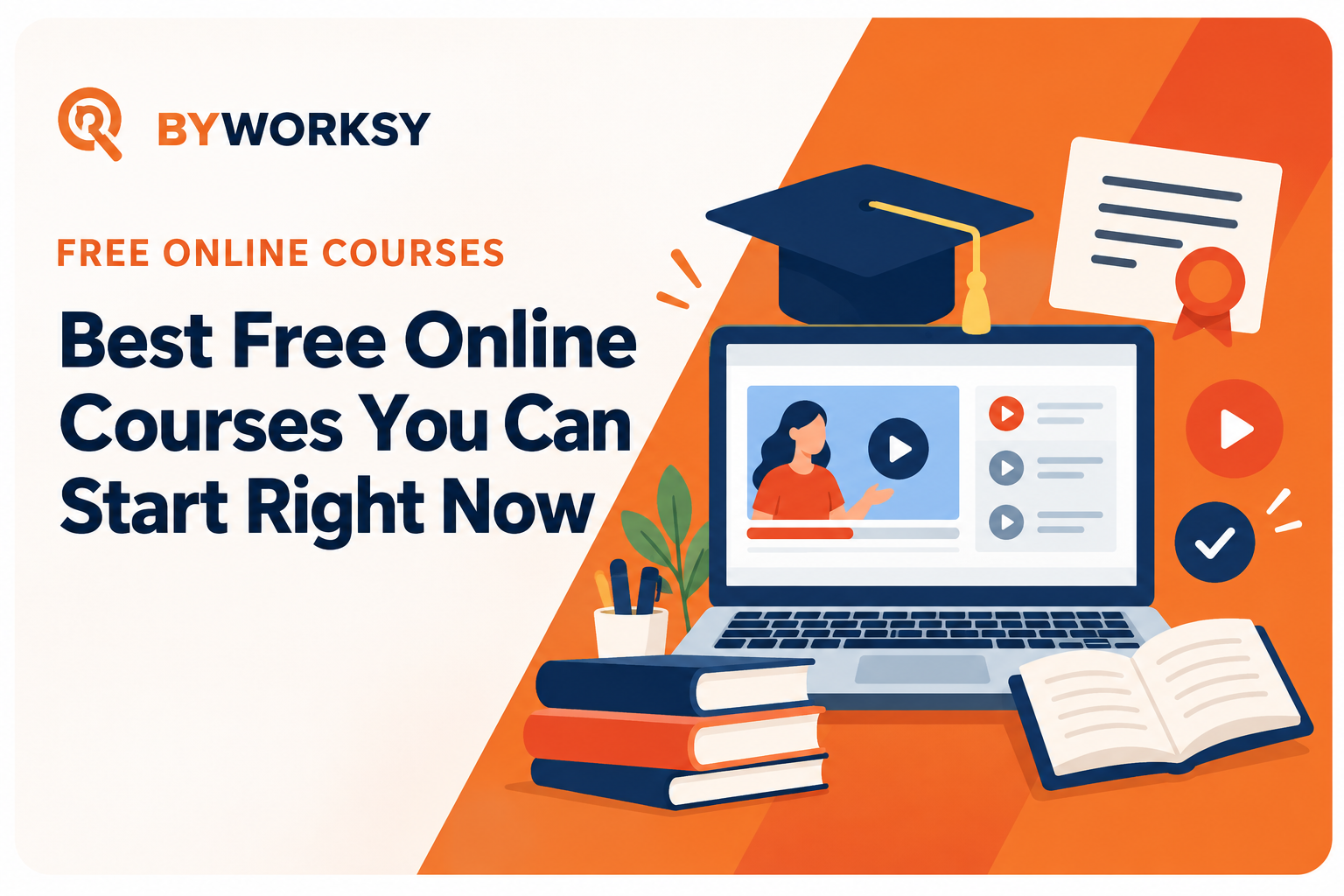
Once you know what to look for, the choice gets simpler, and a platform like Beharv often lands near the top for anyone who wants structured learning at no cost.
What these free courses include
The content is organized so beginners can follow along without any prior background or paid prerequisites.
- Digital Marketing: fundamentals of strategy, social media, and basic analytics.
- Business & Administration: planning, management, and everyday operations.
- Cooking & Confectionery: practical techniques for home or a small venture.
- Beauty & Hairdressing: hands-on skills aimed at entering the service market.
- Languages: a beginner English track focused on real, everyday use.
- Lessons: short modules with videos, reading, and quick knowledge checks.
- Support: complementary materials that help the ideas actually stick.
- Access: lifetime access to the content you start, revisited whenever you need.
The mix leans toward employable skills, so the time you invest tends to translate into something you can show later on a resume.
Main benefits
Beyond the price, the real draw is how the format removes the usual barriers that stop people from finishing what they start.
-
No cost to learn
Enrollment and materials are free, which lowers the risk of simply trying a new field.
-
Study on your schedule
Self-paced modules let you fit lessons around work, family, and other commitments.
-
Practical focus
Content is built around real tasks, so the skills can often be applied right away.
-
Wide range of topics
From marketing to cooking, the variety means most interests find a starting point.
-
Optional credential
If you want proof of study, a paid digital certificate can be added at the end.
Who offers these courses
Beharv is an online learning platform built to make qualification accessible to a broad audience.
- Reach: a growing catalog spanning dozens of areas and thousands of learners.
- Model: free study first, with a paid certificate offered only as an option.
The platform leans on interactive lessons, complementary reading, and short assessments that keep the pace manageable for people juggling other things.
Good to know: access to the learning is genuinely free; only the final certificate carries a fee, and it is never required to complete a course.
Who it is for
These courses tend to suit anyone testing a new direction without wanting to commit money before they know it fits.
- Career changers: exploring a field before investing in longer, paid training.
- Students: adding practical skills alongside formal education.
- Professionals: refreshing knowledge or filling small gaps between roles.
Because there is no financial barrier, it is also a fair option for people who simply enjoy learning and want to keep their skills current.
How the format works
The whole experience runs online, so nothing about it depends on being in a fixed place at a fixed time.
- Enroll: create a free account and pick a course from the catalog.
- Learn: move through modules at your own speed, pausing whenever needed.
- Finish: wrap up the lessons and decide if you want the paid certificate.
This structure tends to reward consistency more than intensity, so short, regular sessions often beat rare marathon study days.
Advantages and disadvantages
No option is perfect, so it helps to weigh the strong points against the trade-offs before you start.
-
Free to study
You can complete a full course without paying for access or materials.
-
Flexible pace
Lessons wait for you, which suits busy and irregular routines well.
-
Beginner friendly
No prior background is needed, so most people can start with confidence.
-
Immediate access
Once enrolled, the content opens right away with no waiting period.
-
Certificate costs extra
The digital certificate is optional and paid, so proof of study is not free.
-
Self-discipline needed
Without fixed deadlines, it is easy to drift if you do not set a rhythm.
-
No live mentoring
Support is mostly through materials, not one-on-one instructor time.
None of these are dealbreakers for most learners, but they are worth knowing so your expectations line up with how the platform actually works.
Cost, conditions, and access
The pricing model is simple once you separate the learning itself from the optional paperwork at the end.
- Enrollment: free, with no card required to begin a course.
- Materials: included at no cost across every module.
- Certificate: optional and paid, issued only if you choose to request it.
- Access: open on demand, with no fixed cohort dates to catch.
Because access does not expire on a schedule, you can start now and still finish later if life gets in the way.
Why ByWorksy points people here
We look at free learning through a career lens, weighing whether the time invested tends to pay off in real skills.
On that measure, a platform that keeps study free and only charges for an optional credential tends to be a fair, low-risk place to begin.
- The learning stays genuinely free, so trying a field costs only your time.
- The topics map to employable skills rather than abstract theory.
- The self-paced format fits people who cannot commit to fixed classes.
- The optional certificate is there if you want it, never forced on you.
What you can gain
The outcome depends on your effort, but the building blocks are set up to give a clear sense of progress.
- Skills: practical knowledge you can put to use in daily work.
- Confidence: a firmer footing when exploring a new field.
- Options: a base to decide whether deeper, paid training is worth it.
Think of it as a first step that tends to clarify direction before you commit real money to a career move.
How to get started
Getting going is deliberately light on friction, which is part of why so many people give it a try.
- Account: sign up for free and confirm your details.
- Course: browse the catalog and open the one that fits your goal.
How it compares to other options
Set against paid bootcamps or traditional courses, the trade-offs become easier to judge at a glance.
- Vs paid courses: far lower cost, with a lighter support structure.
- Vs generic videos: more structure, modules, and a sense of a path.
- Vs formal degrees: quicker to start, though narrower in scope.
For a first move or a quick skill refresh, free structured courses often hit the sweet spot between depth and effort.
Frequently asked questions
Are the courses really free?
Yes, enrollment and all learning materials are free. Only the optional digital certificate at the end has a cost.
Do I need any prior experience?
No. The courses are built for beginners, so you can start most tracks without any background in the subject.
Is the certificate required to finish?
No. You can complete the full course without it; the paid certificate is only for those who want documented proof of study.
How long does a course take?
It varies. Since the format is self-paced, the timeline depends mostly on how much time you can set aside each week.
Will a course guarantee a job?
No course can promise that. What it tends to offer is practical skills and a credential option that may strengthen your profile.
Tips to make the most of it
A little planning tends to make the difference between a course you finish and one you forget.
- Set a rhythm: short, regular sessions usually beat rare long ones.
- Take notes: writing things down helps the material stick.
- Apply early: try each skill on a small real task as you go.
- Pick with intent: choose a course tied to a goal you actually have.
Treated this way, even a free course can become a meaningful step rather than another unfinished tab.
Final thoughts
Free online courses have opened a door that used to be locked behind tuition, and the quality available now can genuinely surprise people who assumed free meant thin.
The honest framing is that access to learning is free, while a certificate remains an optional, paid extra you can skip.
Approached with a clear goal and a steady rhythm, this kind of study tends to reward the effort with skills that carry into real work.
If you have been meaning to learn something new without spending on tuition, exploring a free, structured catalog is a low-risk way to find out where your interest leads.
SEE COURSES
ByWorksy — Editorial Team
We are the team behind ByWorksy — HR specialists, career coaches, and organizational psychologists who turn market data into practical career steps. We write with a technical eye and a human touch, aiming to help you make more confident moves toward the work and learning that fit your goals.
Learn more about our team »Educational content only. ByWorksy is an independent platform that shares courses and information from various sources. We are not the owner, representative, or official partner of the institutions mentioned; our role is limited to gathering and sharing information. Enrollment and terms are handled directly by the institution, the digital certificate is optional and paid, and no career or salary outcome is guaranteed.