How Free Online Courses Are Changing the Way People Upskill
Anúncios
Not long ago, learning a marketable skill usually meant paying for a course; today, a free online option can often get you moving just as fast.
That shift has pulled millions of people into study who once assumed quality training was simply out of their budget.
The trick is finding a place that stays free to study, adapts to your schedule, and points you toward skills employers actually value.
- Price: zero to enroll and zero for the study materials.
- Access: online and self-directed, available from phone or computer.
- Proof: a certificate can be issued at the end for an optional fee.
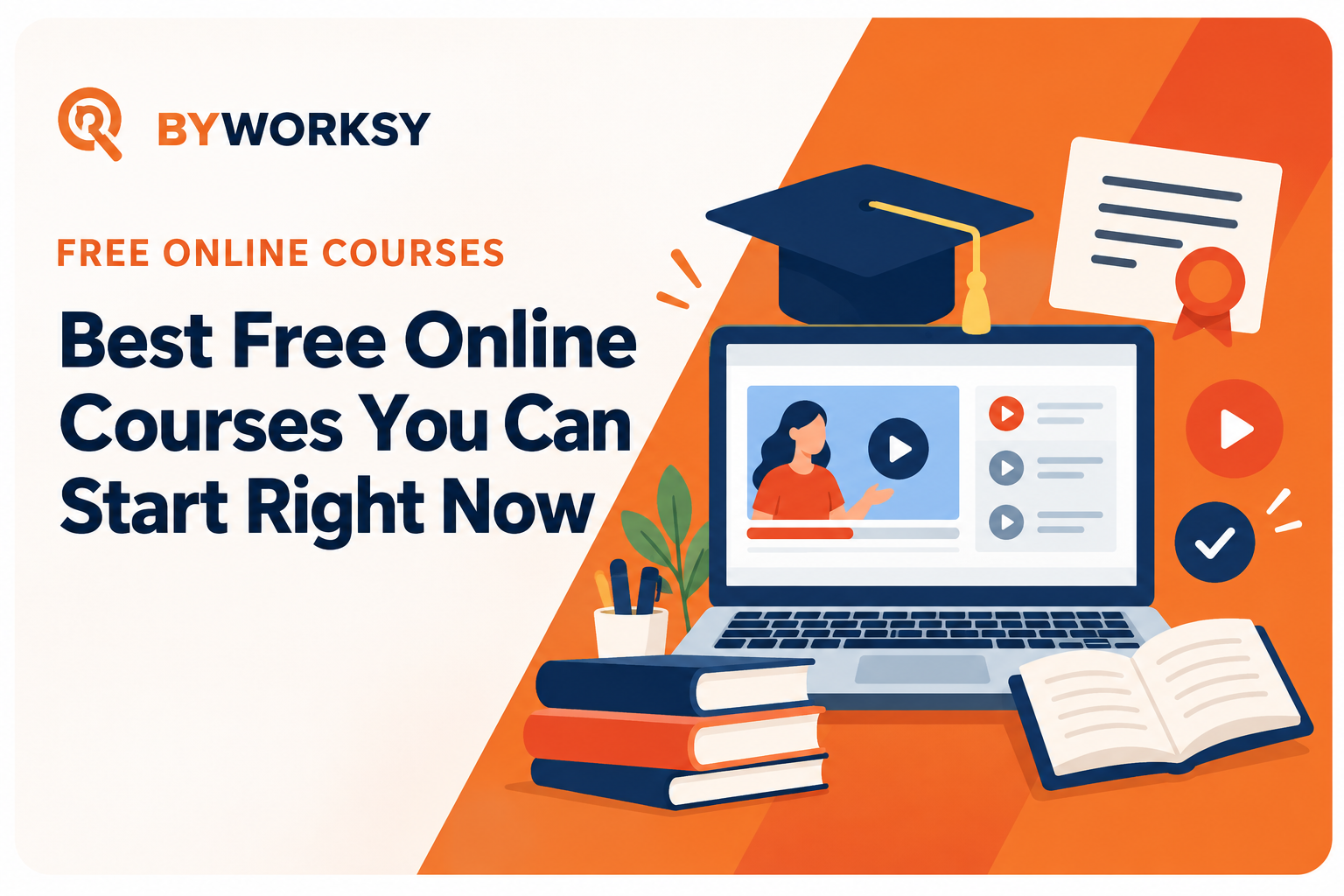
Among the platforms riding this wave, Beharv stands out for keeping the learning itself free while treating the certificate as a separate, optional choice.
What’s inside these free programs
Each track is laid out for newcomers, so you rarely need experience or any paid tool to begin.
- Marketing: a grounding in digital strategy, content, and simple metrics.
- Management: the basics of running a team, a budget, or a small business.
- Gastronomy: cooking and confectionery techniques for home or trade.
- Personal care: beauty and hairdressing routes aimed at real service work.
- English: an entry-level language course built around everyday situations.
- Modules: bite-sized lessons that mix video, text, and quick checks.
- Extras: supporting resources that reinforce what each lesson covers.
- Availability: ongoing access to whatever course you decide to open.
The catalog favors skills with a clear use, so hours spent studying tend to turn into something concrete on a resume.
The upside for learners
Cost is only the headline; the deeper benefit is how the setup clears away the reasons people usually quit.
-
Nothing to pay upfront
Free access means you can test an interest before spending a cent on it.
-
Fits around life
Because it is self-paced, study slots into gaps in a busy week with ease.
-
Built to be used
Lessons lean practical, so much of what you learn can be applied quickly.
-
Something for everyone
With topics from cooking to marketing, most goals find a natural entry point.
-
Credential if you want it
A paid certificate is available at the end for anyone who needs documented proof.
The platform behind them
Beharv positions itself as an accessible route into qualification for a wide range of learners.
- Scale: an expanding library of courses across many fields of interest.
- Approach: free learning at the core, with the certificate kept optional.
Its lessons combine short videos, reading, and quick assessments, a rhythm that tends to work well for people fitting study around a full day.
Worth repeating: the study is free; the certificate is the only paid piece, and skipping it does not stop you from finishing a course.
Who benefits most
The model tends to fit people who want to explore before they invest, whatever their stage in life.
- New directions: anyone weighing a career shift without upfront risk.
- Learners in school: students layering practical skills onto their studies.
- Working professionals: people topping up knowledge between roles or projects.
Since money is not the gatekeeper, it also welcomes curious learners who simply want to keep growing at their own pace.
How studying actually flows
Everything happens online, which frees the experience from any fixed room or timetable.
- Register: open a free account and choose your first course.
- Progress: work through modules whenever suits you, pausing at will.
- Complete: close out the lessons and opt in or out of the paid certificate.
In practice, steady weekly habits tend to carry people further than occasional bursts of long, tiring study.
Strengths and trade-offs
Every route has limits, so a quick look at both sides helps set fair expectations.
-
Zero study cost
A whole course can be finished without paying for access or content.
-
Own your schedule
The pace bends to you, which is ideal for shifting, unpredictable weeks.
-
Easy on ramp
No entry requirements mean newcomers can dive in without hesitation.
-
Instant start
Content unlocks as soon as you enroll, with nothing to wait around for.
-
The certificate is paid
Documented proof of study carries a fee, even though the course does not.
-
You set the discipline
Freedom cuts both ways; without a routine, progress can quietly stall.
-
Limited live guidance
Help leans on materials rather than direct, real-time instructor contact.
For most people these limits are manageable, yet knowing them upfront keeps the experience honest and free of unpleasant surprises later.
Pricing and access explained
The money question clears up quickly once you split the free learning from the optional certificate.
- Sign-up: free, and no payment details are needed to start.
- Content: every module is included at no charge.
- Certificate: optional and paid, requested only if you want it.
- Timing: open access, with no cohort start dates to miss.
With no expiry pressure, you can begin whenever and pick the pace back up if your schedule tightens.
Why we highlight this route
We judge free learning by one question: does the time you put in tend to come back as usable skill?
By that standard, a platform that keeps study free and reserves payment for an optional credential reads as a sensible, low-stakes starting point.
- Study stays free, so exploring a field only spends your hours, not your wallet.
- Courses target practical, hireable skills instead of abstract theory.
- The self-paced setup respects people who cannot attend fixed classes.
- The certificate waits as an option, never a requirement to finish.
The payoff you can expect
Results track with effort, but the structure is designed to make progress visible along the way.
- Ability: concrete skills you can bring to everyday tasks.
- Assurance: steadier ground when stepping into unfamiliar work.
- Direction: a clearer read on whether paid training is worth pursuing.
Seen that way, a free course often works as a scouting trip before you spend real money on a bigger move.
Starting in two steps
The barrier to entry is intentionally low, which is a big part of the appeal.
- Create: register for free and verify your account.
- Choose: scan the catalog and open the course that matches your aim.
Stacked against the alternatives
Lined up beside paid or traditional routes, the strengths and gaps come into focus fast.
- Vs paid programs: a fraction of the cost, with lighter hand-holding.
- Vs loose video playlists: a real structure and a sense of a path.
- Vs university study: faster to begin, though narrower in reach.
For a first step or a quick refresh, free structured courses often strike a smart balance of depth and effort.
Common questions
Is it genuinely free to study?
Yes. Enrollment and all materials cost nothing. The only charge is the optional certificate you can request at the end.
Can a complete beginner start?
Absolutely. Courses assume no background, so most people can begin a track without any prior knowledge of the topic.
Do I have to buy the certificate?
No. Finishing the lessons does not depend on it. The paid certificate exists only for those who want documented proof.
How much time will it take?
That is up to you. With a self-paced format, your weekly availability sets the timeline rather than a fixed schedule.
Does finishing lead to a job?
No platform can guarantee that. What it can offer is practical skills and an optional credential that may help your profile.
Getting more from each course
A bit of structure on your side tends to separate the courses you complete from the ones you abandon.
- Schedule it: book small, regular study blocks in your week.
- Write it down: notes turn passive watching into active learning.
- Use it fast: apply each new skill to a tiny real task right away.
- Choose wisely: pick a course that ties to a goal you already hold.
Handled like this, even free study can become a genuine milestone rather than one more forgotten login.
Wrapping up
The rise of free online courses has reshaped who gets to learn, dropping the old wall of tuition and letting curiosity, not budget, decide where someone starts.
Kept in perspective, the deal is straightforward: the learning comes free, while the certificate stays an optional cost you are free to leave.
Paired with a clear aim and a steady weekly habit, this style of study tends to hand back real, usable skill for the time you commit.
If a new skill has been sitting on your list, a free and structured catalog is an easy, low-risk way to see how far your interest can take you.
SEE COURSES
ByWorksy — Editorial Team
We are the team behind ByWorksy — HR specialists, career coaches, and organizational psychologists who turn market data into practical career steps. We write with a technical eye and a human touch, aiming to help you make more confident moves toward the work and learning that fit your goals.
Learn more about our team »Educational content only. ByWorksy is an independent platform that shares courses and information from various sources. We are not the owner, representative, or official partner of the institutions mentioned; our role is limited to gathering and sharing information. Enrollment and terms are handled directly by the institution, the digital certificate is optional and paid, and no career or salary outcome is guaranteed.